Commercial real estate in 2026 continues to be shaped by economic adjustment, shifting tenant demand, and long-term structural changes that are impacting all major asset classes. While market conditions vary by property type and location, several consistent themes are driving leasing, investment, and development decisions across the Philadelphia region and beyond.
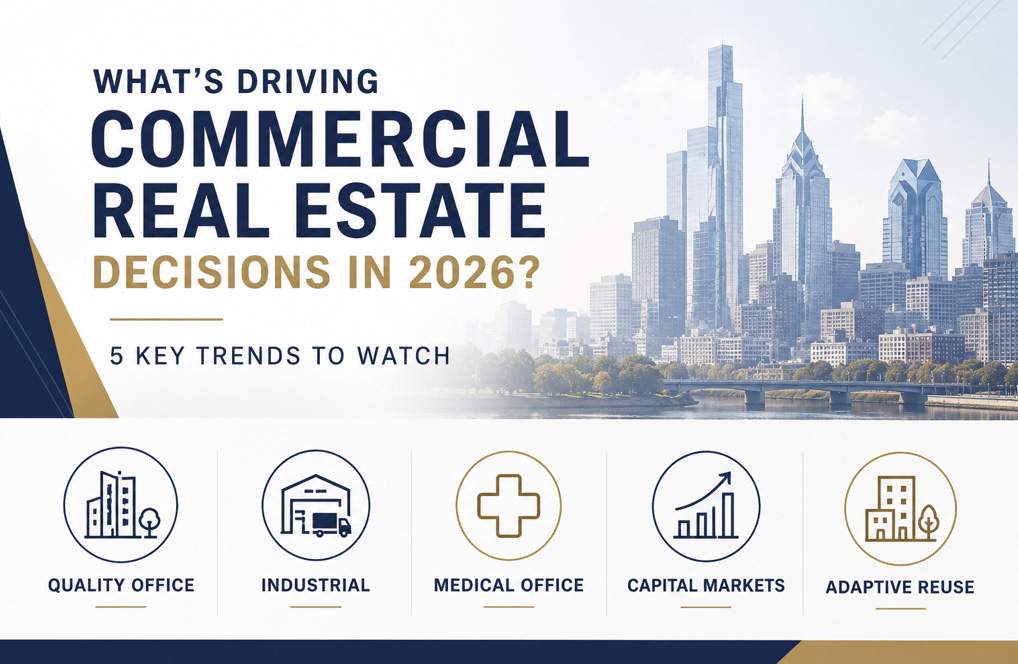
1. Flight to Quality Continues to Define Office Demand
The “flight to quality” trend remains one of the strongest forces in the office market.
Tenants continue to downsize in many cases, but prioritize higher-quality space, stronger building systems, better parking, natural light, and amenity-driven environments. As a result, demand is concentrating in well-located, modernized buildings.
Older suburban office properties that have not been repositioned are experiencing longer leasing timelines and increased vacancy pressure. In contrast, well-located assets in markets like Chester County and the western suburbs of Philadelphia continue to outperform when they offer functional layouts and accessibility.
2. Industrial Real Estate Is Stabilizing After Rapid Growth
Following several years of historic expansion, industrial real estate is transitioning into a more balanced market.
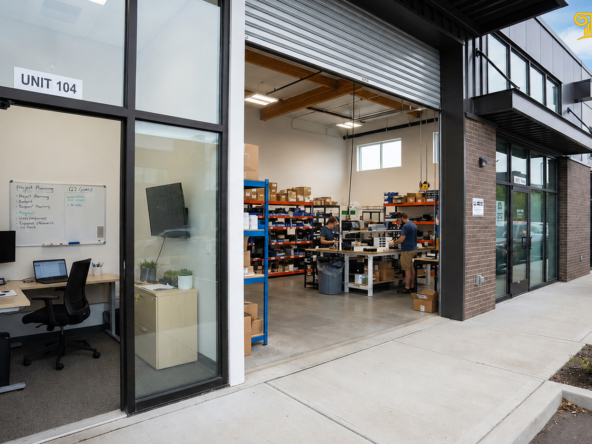
Vacancy has increased slightly in select submarkets, but fundamentals remain strong—especially for logistics, distribution, and last-mile industrial space in Pennsylvania.
E-commerce demand, supply chain diversification, and regional warehousing needs continue to support long-term stability. However, tenants now have more negotiating power, resulting in more competitive lease structures, concessions, and build-out packages.
3. Medical Office and Healthcare Real Estate Remain Resilient
Medical office continues to be one of the most consistent outperformers in commercial real estate.
Demand is supported by long-term demographic trends, outpatient care expansion, and providers seeking convenient suburban access points for patients.
Well-located medical office properties with strong parking ratios, efficient floor plates, and proximity to dense residential populations continue to see strong leasing activity across Southeastern Pennsylvania medical office markets.
4. Capital Markets Are Selective but Active
Capital has not exited the market—it has become more disciplined.
Lenders and investors are prioritizing:
- Strong in-place cash flow
- Tenant credit and lease term
- Location quality and long-term fundamentals
- Conservative underwriting assumptions
Transactions are still occurring, but pricing expectations must be aligned early in the process. Properties with clear value-add potential or stable income profiles continue to attract the most interest.
5. Adaptive Reuse and Repositioning Are Increasing
As certain office and retail assets face continued pressure, adaptive reuse strategies are becoming more common across suburban markets.
Conversions to medical office, mixed-use, residential, or flexible workspace are increasingly being evaluated—especially for underutilized suburban properties.
Zoning flexibility, municipal approval processes, and redevelopment feasibility are now key factors in determining whether repositioning strategies move forward.
Final Thoughts
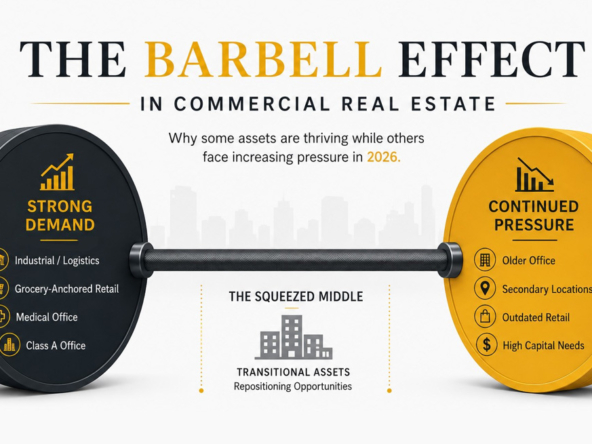
Commercial real estate in 2026 is increasingly defined by selectivity rather than broad market movement.
Success is driven by asset positioning, realistic pricing, tenant demand, and long-term usability. The gap between high-performing and underperforming assets continues to widen, making strategic decision-making more important than ever.
For owners and investors, understanding where a property sits within today’s market is critical when evaluating leasing strategy, investment decisions, or disposition timing.